Post #2 in a series from students working in the Wyeth lab this summer. Next up are Ryan Bergman, James Hanlon and Aidan McGowan, who are surveying juvenile lobster behaviour in the near shore environments around the southern Gulf of St. Lawerence.
Our research focuses on s juvenile lobster abundance and behavior along the Scallop Buffer Zone. These protected zones along Nova Scotia’s northern coastline encompass pristine habitat for juvenile lobsters, which tend to settle in complex rocky habitats. Using underwater videography, we aim to explore the distribution of juvenile lobsters along the Scallop Buffer Zone. Additionally, we aim to use these videos to learn about the behavioral patterns of juvenile lobsters in the presence of bait.
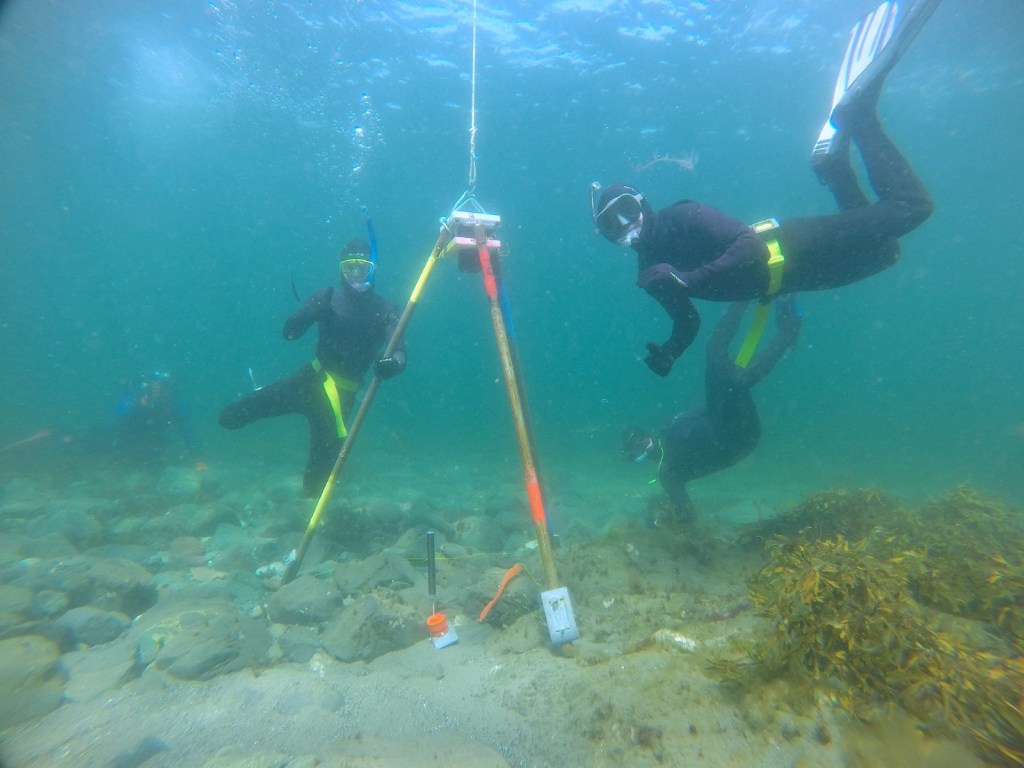
After selecting a beach to survey for lobsters, we head into the field and setup our cameras. To position them in the water, the cameras are placed on tripods made from metal poles roughly 2 meters tall. We then carry them into the water, attach buoys to the head and leg poles, and swim the tripod out as it floats in the water. In wetsuits and snorkeling gear, we search for ideal filming locations that lobsters may settle – for example, near the edges of seaweed and over rock piles.
Filming over four hours of footage each day, we analyze our video data by first counting and measuring the size of lobsters. This allows us to identify habitats that juvenile lobsters frequently use and find beach sites that provide such favorable conditions. Using this contextual data, we will then document the behaviors of the juveniles as they are drawn out of their shelters with bait. This will us to classify how juvenile’s behaviour varies across different habitats and population densities.
 Wyeth Lab