Biofouling and Antifouling Coatings

biofouling comparison

A control plate (left)  fouled by C. intestinalis vs a siloxane plate (right) with reduced fouling.

Biofouling, or the growth of organisms on man-made surfaces, affects many industries: food production, oil and gas, and shipping, among many others. As part of the StFX Centre for Biofouling Research, we are exploring novel non-toxic options for reducing biofouling, particularly focused on cold water marine habitats. The WyethLab’s role is primarily involved in field surveys of biofouling and field tests of candidate coatings that may reduce biofouling.  We also partner with industry members to collaborative test commercial coatings.

Our projects include:

Gastropod Sensory Systems

lymnaea
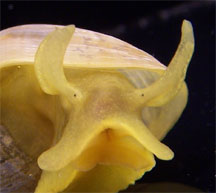
The pond snail Lymnaea

Sensory systems are a key component in the control of most behaviours. At present, our understanding of gastropod sensory systems is limited. Previous research on the peripheral nervous system has created a patchwork of information encompassing different sensory cell types scattered across different species. Our long-term goal is to create a catalog of sensory cell types, including morphology, distributions and modality (particularly mechanosensory vs chemosensory).

Our experimental animals for this work:

hermissenda
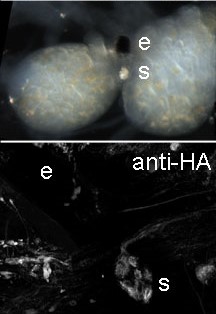
Hermissenda‘s brain, with histamine in the statocyst (s) but not the eye (e).
  • Lymnaea stagnalis (pond snail)
  • Hermissenda crassicornis (opalescent nudibranch)
  • Aplysia californica (California sea hare)

And we use these animals in various projects:

  • Immunohistochemical, backfill, and vital dye labelling of sensory neurons to provide both anatomical information as well as putative neurotransmitter(s) for each sensory cell type.doi:10.1002/cne.22607

    doi:10.1002/cne.23795

  • Behavioural assays to test the roles of different sensory cell types/neurotransmitters in different behaviours.
  • Novel approaches to assessing function of the sensory cells by directly testing their responses to mechanical and chemical stimuli (optical recordings) or making use of modern molecular genetics (gene expression analyses, perhaps knock-down experiments).
    cne23795-toc-0001
    Sensory cells in Aplysia siphon

Collaborators: Roger Croll, Dan Jackson, Scott Cummins

Congratulations Amelia, Jane and Shelby

Wyethlab students Amelia MacKenzie, Jane Fletcher, and Shelby Brown have just received their BSc degrees. Amelia is going to continue to work on an antifouling project, while Jane and Shelby have just completed a directed study focused on sea slug navigation behaviour. Congrats to all 3 on your achievements at StFX!

Video Analysis Methods

Project Update: we develop methods (hacks) to analyze videos using freely available open- source software.

Picture1

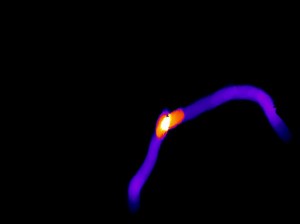
A “videogram” showing movement path of a sea slug.  Video below demos its creation.

The overall goal is two-fold:

  1. Create frame-processing algorithms that allow videos of animal behaviour to be displayed as single images displaying key components of behaviour.   Subsequent image projection techniques then allow all replicates within a treatment to be combined into a single image.  These then provide a useful tool for  qualitative and quantitative analyses of behaviour without explicit of tracking of structures or individuals.
  2. Establish work-flows for using open-source tracking software options with maximum flexibility in video sources and subsequent analyses.

Examples of our videograms or tracking used to analyze behaviour in:

Some initial tips…

For videograms: This chapter explains videograms and how to use them in more detail. To get started, use the demo procedure in ImageJ to produce a videogram from one of the versions of this sample video.

For open-source tracking: start with ImageJ (that’s the FIJI version), and make use of the FFMPEG plugin (available in the “Manage update sites option” in the Updater).  Then explore the MTrackJ (manual tracking, great analysis options) and Trackmate (automated tracking) plugins.  This converter helps get Trackmate data into MTrackJ for analysis.