
Not everyone made it, but those that did had fun! Cheers to Tia, Lexy, James, Ryan, Aidan and Lauren
Not everyone made it, but those that did had fun! Cheers to Tia, Lexy, James, Ryan, Aidan and Lauren
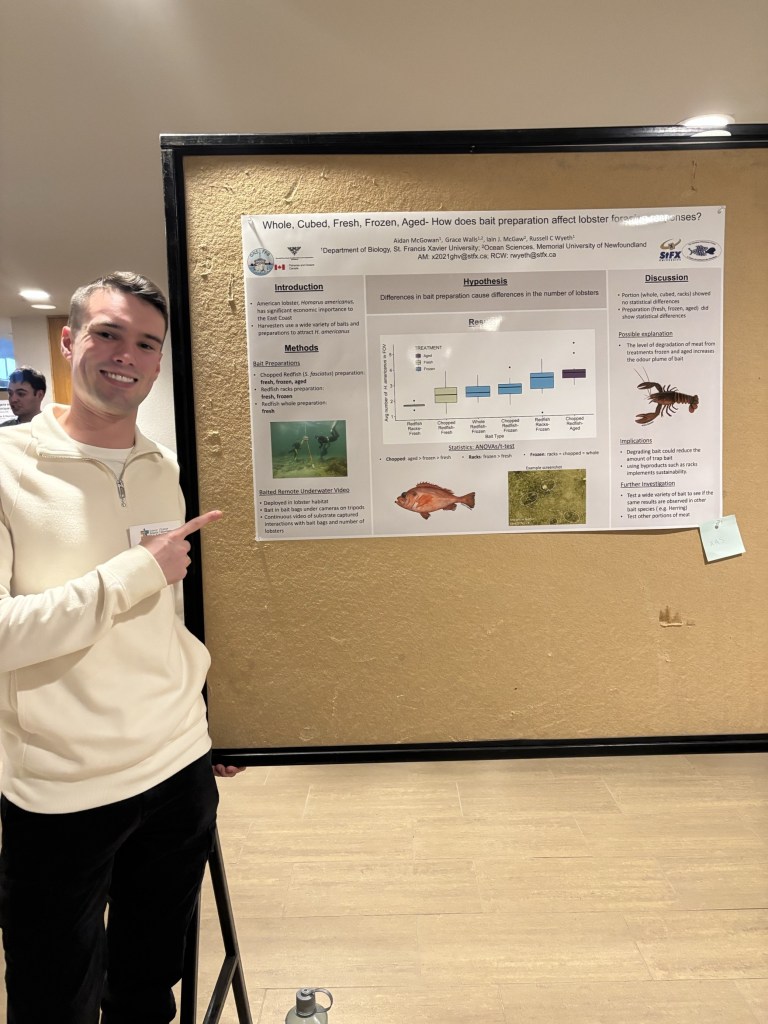
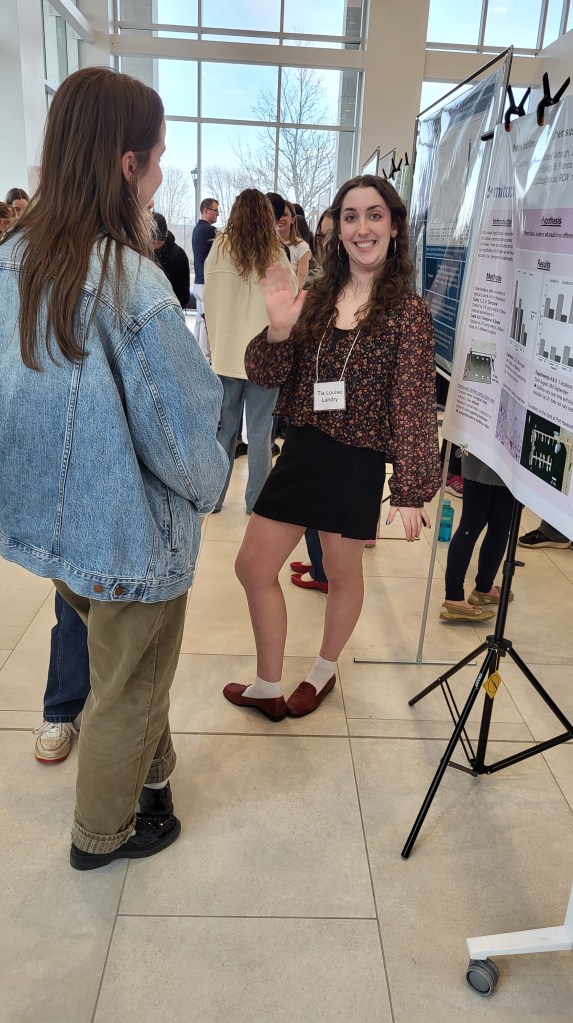

Kudos to the awesome undergraduate students who have been sharing our work recently! At Science Atlantic, Aidan McGowan presented some of the collective work of the lobster group on how lobsters respond to different portions and preparations of bait (lobsters aren’t picky). At Student Research Day, Tia Landry presented on the biofouling group‘s initial explorations of how the susceptibility of biofilms to ultraviolet light varies with time and location (it doesn’t). Also at Student Research Day, Lauren Pictou presented on some her work from last summer on the snail neuroanatomy. So far, she’s found very little matching between FOUR different methods for labelling Choline Acetyltranferase (the enzyme that makes the neurotransmitter acetylcholine). All three poster posters are below!
(more…)Post #4 in a series from students working in the Wyeth lab this summer. This time it’s Victoria Tweedie-Pitre and Lauren PIctou working with Yulia Reunova on gastropod neuroanatomy.
More from Victoria and Lauren…
The Wyeth Lab neuroanatomy team is currently focused on identifying and describing different neuron types in the nervous system of the great pond snail, Lymnaea stagnalis. This freshwater pulmonate is commonly used as a model organism in neurobiology due to its relatively large (including giant neurons!) and fewer neurons making it ideal for detailed studies.
Neuroanatomy is a crucial starting point in neuroethology, as mapping out the structural framework of neurons and their connections is essential before understanding how the nervous system controls behavior. By using genes and functional proteins associated with neurotransmitter synthesis, we can classify different neuron types. Our research aims to advance neuronal classification by investigating the anatomical morphology and distribution patterns of neurons containing various neural-specific genes and proteins in L. stagnalis.
We use two methods: immunohistochemistry and in situ hybridization chain reaction (HCR). Immunohistochemistry is a protein-based technique that uses antibodies to label antigens, while HCR is an mRNA-based technique that labels gene target sequences. Recently, we have been combining both techniques in a single protocol, allowing us to closely visualize neurons that contain both mRNA and the functional proteins involved in neurotransmitter synthesis.
Our current investigations focus on several key enzymes involved in neurotransmitter synthesis:
By exploring these enzymes with different molecular techniques, we aim to uncover new insights into the complex organization and function of the nervous system in L. stagnalis. Overall, this will help bring us a step closer towards the goal of understanding how the nervous system works to control behaviour!


Post #3 Part 2 in a series from students working in the Wyeth lab this summer. This time it’s Mike Murtaugh working with Tia Landry and Aaron Cogger – working on several biofouling projects.
More from Mike…
In the biofouling research group we are constantly testing new antifouling coatings, checking several aspects, such as toxicity, the ease with which fouling is released and in situ overall effectiveness. A new batch of state-of-the-art coatings has recently been deployed at Port Hawkesbury to be analyzed weekly and compared to control plates. We are excited to see how much time can go by before these plates start accumulating visible biomass and what species will be the first to colonize, if any. Interesting results have been obtained from a coating tested during spring, which was made with one goal in mind, to prevent barnacles from settling. This task has been proven easier said than done in the past, however this novel coating showed very promising results, as seen in the image comparing a control to the coating. Can you count how many barnacles are attached to the control plate? How about on the coating?

Fig. 3. Five-week-old experimental plates deployed during spring at Arisaig harbor. There is noticeable recruitment of barnacle on the control plate (1), while no barnacles were recorded to settle on the coated plate (2).
There is no one way to prevent biofouling, just as there is no one way it is formed. Because of this, its control will most likely come from a combination of various methods or specific treatments that will vary between locations and fouling communities. There is still much to be learned and here in the Wyeth Lab we are anxious to learn as much as we can about this challenging subject, to help find a solution to this age-old problem.
Post #3 Part 1 in a series from students working in the Wyeth lab this summer. This time it’s Mike Murtaugh working with Tia Landry and Aaron Cogger – working on several biofouling projects.
Mike says: as part of the biofouling research team in the Wyeth Lab, my master’s degree project focusses on contributing to the body of knowledge regarding the use of ultraviolet (UV) light for antifouling purposes and it has provided me with a fascinating view into the life history of the many biofouling members. By recording early recruitment and larval availability throughout the summer months of last year, many larval stages with intriguing shapes have been photographed and paired with their benthic counterparts.

Additionally, I am assessing the effect that a minimal UV light treatment has on biofouling communities, by tracking biofouling development on glass surfaces with and without a UV treatment at two Nova Scotian locations through photo-analysis. With these methods, I have found some interesting results from last summer, including changes in community composition caused by the UV treatment which subsequently affected biofouling diversity. Although these results are quite interesting and have important implications, this summer I will repeat my methodology, expecting to expand on these results and further test my hypotheses.
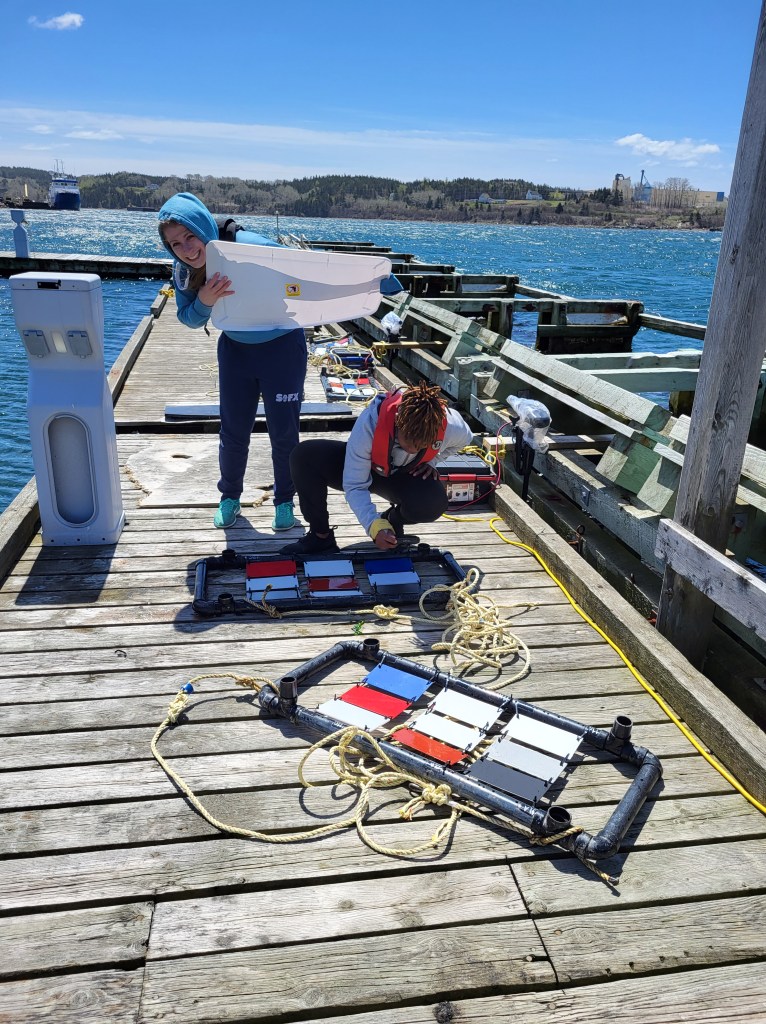
The Centre for Biofouling Research (CBR) at St. Francis Xavier University is seeking one or two research technicians. Our fundamental and applied research program explores both marine biofouling (the growth of unwanted organisms on marine infrastructure) and novel low-toxicity approaches to antifouling (the mitigation of biofouling). The technician(s) will help coordinate and participate in several ongoing research projects with respect to biofouling and environmentally-friendly antifouling. The position(s) will be primarily focused on supporting our research projects in collaboration with GIT Coatings, who are developing graphene-based coatings. Projects will include both field trials of newly developed coatings and lab-based toxicity assays. The technician will work as part of the biofouling team of students, all working with the supervision of Dr. Russell Wyeth. Activities working towards completion of the project will entail working as a group to plan and implement field and lab work, undertake sampling, and, once completed, prepare oral and written communications about the project(s). Administrative tasks in support of the supervisor will also be involved, as well as opportunities to engage with other active research projects.
To apply, please send a transcript, resume, and cover letter to Russell Wyeth – rwyeth@stfx.ca
The cover letter should summarize:
Post #2 in a series from students working in the Wyeth lab this summer. Next up are Ryan Bergman, James Hanlon and Aidan McGowan, who are surveying juvenile lobster behaviour in the near shore environments around the southern Gulf of St. Lawerence.
Our research focuses on s juvenile lobster abundance and behavior along the Scallop Buffer Zone. These protected zones along Nova Scotia’s northern coastline encompass pristine habitat for juvenile lobsters, which tend to settle in complex rocky habitats. Using underwater videography, we aim to explore the distribution of juvenile lobsters along the Scallop Buffer Zone. Additionally, we aim to use these videos to learn about the behavioral patterns of juvenile lobsters in the presence of bait.
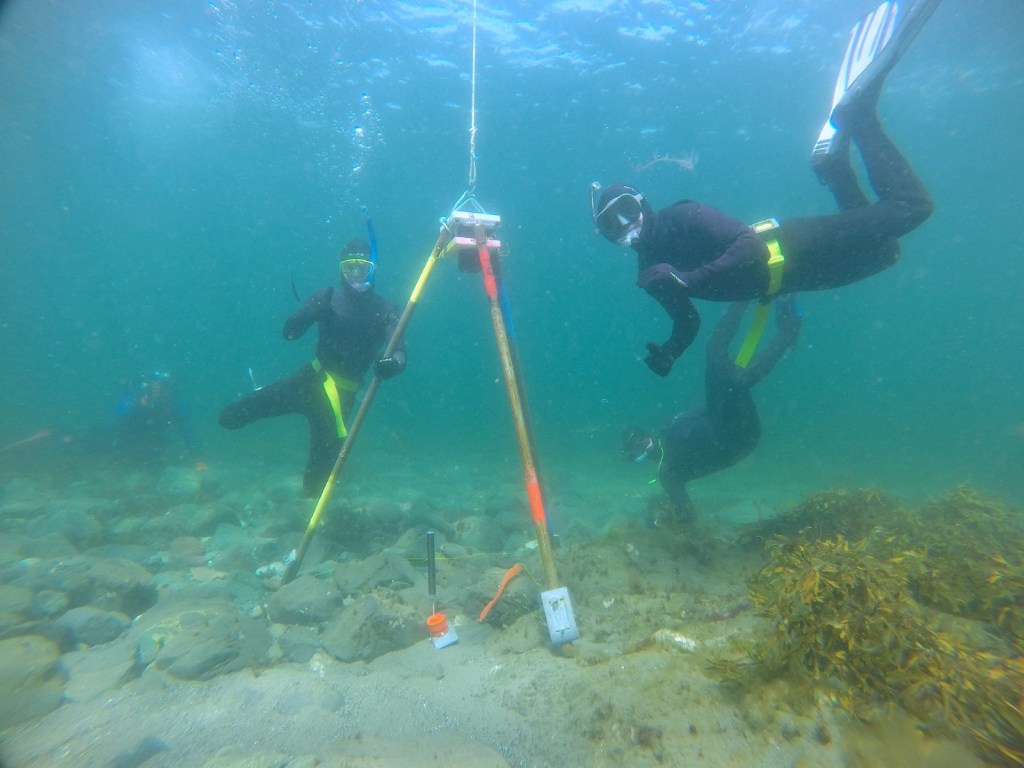
After selecting a beach to survey for lobsters, we head into the field and setup our cameras. To position them in the water, the cameras are placed on tripods made from metal poles roughly 2 meters tall. We then carry them into the water, attach buoys to the head and leg poles, and swim the tripod out as it floats in the water. In wetsuits and snorkeling gear, we search for ideal filming locations that lobsters may settle – for example, near the edges of seaweed and over rock piles.
Filming over four hours of footage each day, we analyze our video data by first counting and measuring the size of lobsters. This allows us to identify habitats that juvenile lobsters frequently use and find beach sites that provide such favorable conditions. Using this contextual data, we will then document the behaviors of the juveniles as they are drawn out of their shelters with bait. This will us to classify how juvenile’s behaviour varies across different habitats and population densities.

My name is Victoria Tweedie-Pitre, and I am a recent graduate from StFX with a Joint Honours in Biology and Chemistry. I am so excited to be working for a second summer in the Wyeth Lab where I focuses on exploring the intricate neuroanatomy of the great pond snail, Lymnaea stagnalis. Using cutting-edge techniques such as in situ Hybridization Chain Reaction, I categorize and map different neuron types based on their association with neurotransmitter synthesis. I have always had a passion for exploration and love for marine biology, and I am excited to continue channeling this enthusiasm into my research. After completing my work here, I am returning home to the Northwest Territories to engage in a low arctic terrestrial ecology project before pursuing a master’s degree. I am incredibly grateful to be a part of the Wyeth Lab, and I am eager to continue developing skills that will be invaluable throughout my career and life.
Post #1 in a series of posts from students working in the Wyeth lab this summer. First up is Lexy Reinhardt, who is collecting data for her MSc thesis focused on the navigation behaviour of the sea slug Hermissenda crassicornis. Take it away Lexy…
Dr. Wyeth and I are currently at the Bamfield Marine Science Centre collecting underwater videos of sea slugs in their natural habitat for my MSc thesis. My ongoing research project focuses on the behavior and navigation of Hermissenda crassicornis, commonly known as the thick-horned nudibranch.
For the past three weeks, we have undertaken daily SCUBA dives to deploy and recover underwater video cameras mounted on tripods. These cameras are strategically placed to capture video of the nudibranchs as they move through their natural environment.
The high-quality video, the likes of which have never been captured before, will enable us to conduct detailed analyses of movement patters and also contribute to the broader understanding of Hermissenda crassicornis behaviour. Though we are still in the early stages of data collection, we’ve already begun to observe some intriguing patterns and behaviours!
In the coming weeks, we will continue our daily dives and video recordings. Our goal is to gather a comprehensive set of videos that will allow us to identify specific navigational trends and behavioural characteristics associated with different flow environments and chemical stimulus sources.
We are thrilled with our progress so far and look forward to sharing more detailed findings as our project advances. Stay tuned for further updates!

I am Dr. Yulia Reunova and I have been working as a research associate in the laboratory of Dr. Russell Wyeth for the past two years, studying the neuroanatomy of the great pond snail, Lymnaea stagnalis, using Immunohistochemistry and in situ hybridization chain reaction, and combining the two to label target RNAs and proteins in the central and peripheral nervous system. My previous experience lies in the field of reproductive biology, using molecular biology methods and scanning and transmission electron microscopy. My passion is mastering new and challenging methods.
 Wyeth Lab