The observation of a seemingly simple feeding event can provide new insights into how sea slugs navigate changing ocean conditions. Pictured here is the sea slug Hermissenda crassicornis on an orange cup coral, with visible damage exposing the coral’s white skeleton. These slugs were previously thought to feed mostly on hydroids (small marine animals related to jellyfish), but my research suggests they may actually prefer orange cup coral, as shown here. This discovery is part of our work to understand how these sea slugs find food in environments with variable tidal flow and strong wave action, which can disrupt the odor plumes they might otherwise follow. While at the Bamfield Marine Sciences Centre on the West Coast of Canada, we took some video recordings of these slugs in their natural habitat. By analyzing these recordings, we are uncovering new behavioural patterns that may help explain how they successfully forage in such dynamic ocean conditions.
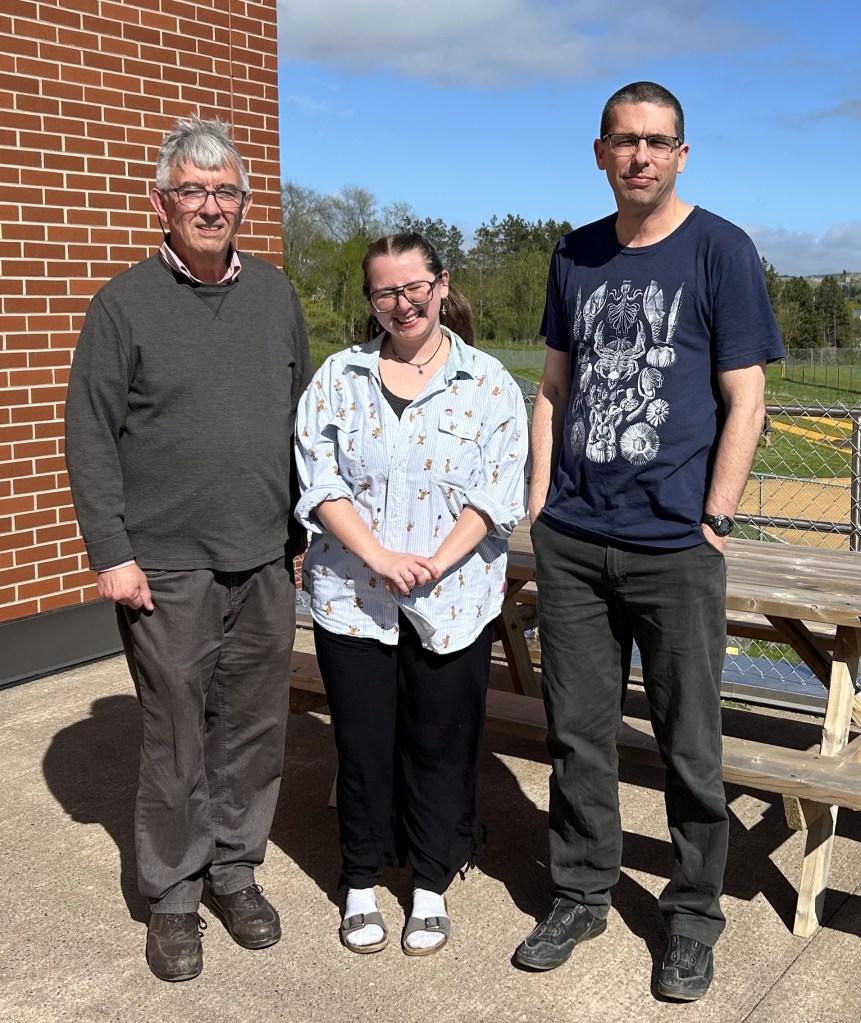
Yet more congratulations to announce! Tanya O’Reilly successfully defended her MSc thesis today: Ribbed Mussel (Geukensia demissa) Demographics and Interactions with Cord Grass (Sporobolus alterniflorus) in the southern Gulf of St. Lawrence, Nova Scotia. Tanya studied the ribbed mussels in salt marshes along the Southern Gulf of St. Lawrence. She found evidence suggesting substantial population declines over the last decade or more, likely linked to sea level rise and erosion of the seaward edges of the marshes. Western populations were faring much better than eastern populations. A fantastic achievement, Tanya!
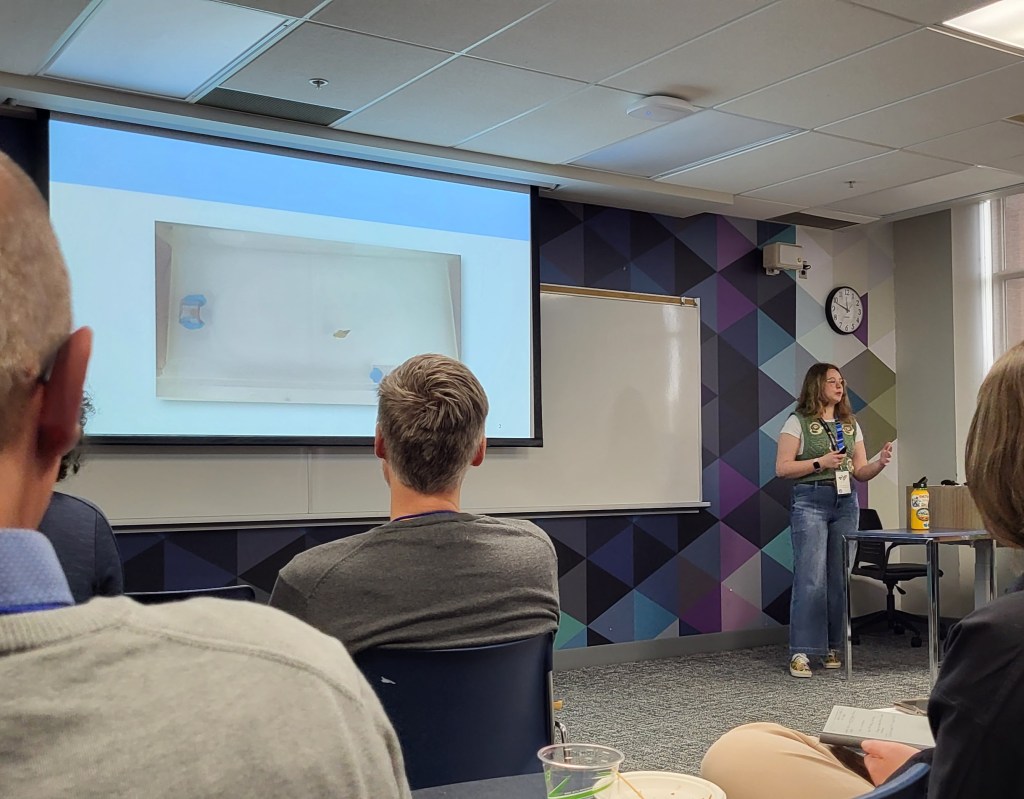
Victoria presented her Honours thesis work (with help from Yulia) on snail neuroanatomy: Unravelling neuroanatomical complexities: Discrepancies in the labelling of octopaminergic markers in the nervous system of Lymnaea stagnalis. She did a fantastic job as the sole undergraduate competitor for the Hall Award for best student presentation in the disciplines of comparative morphology, development and biomechanics.
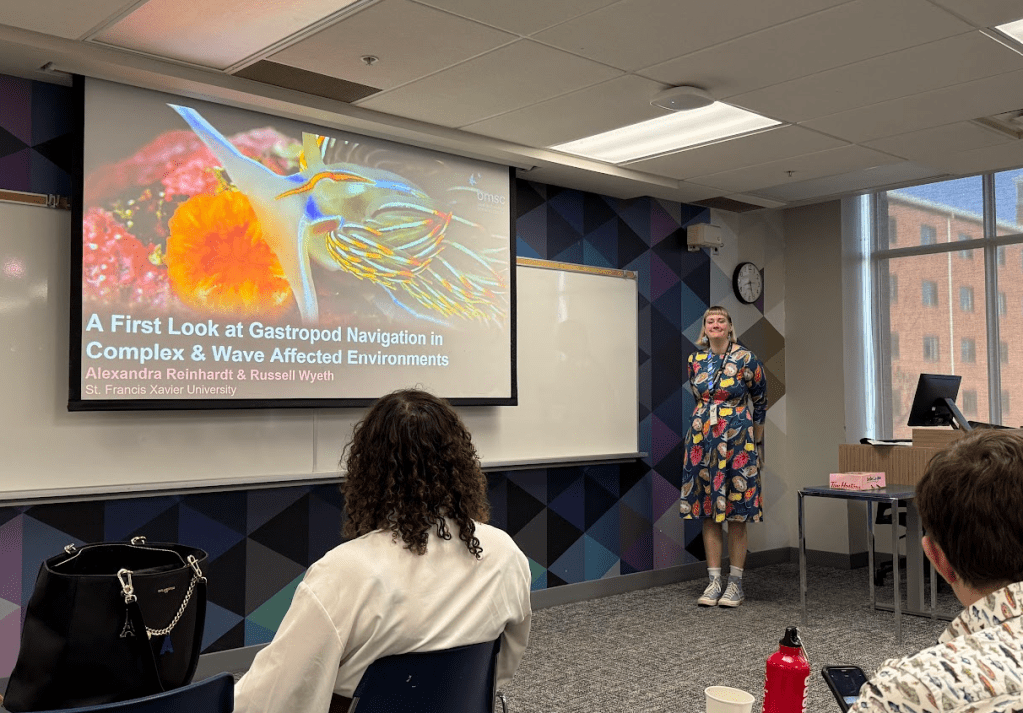
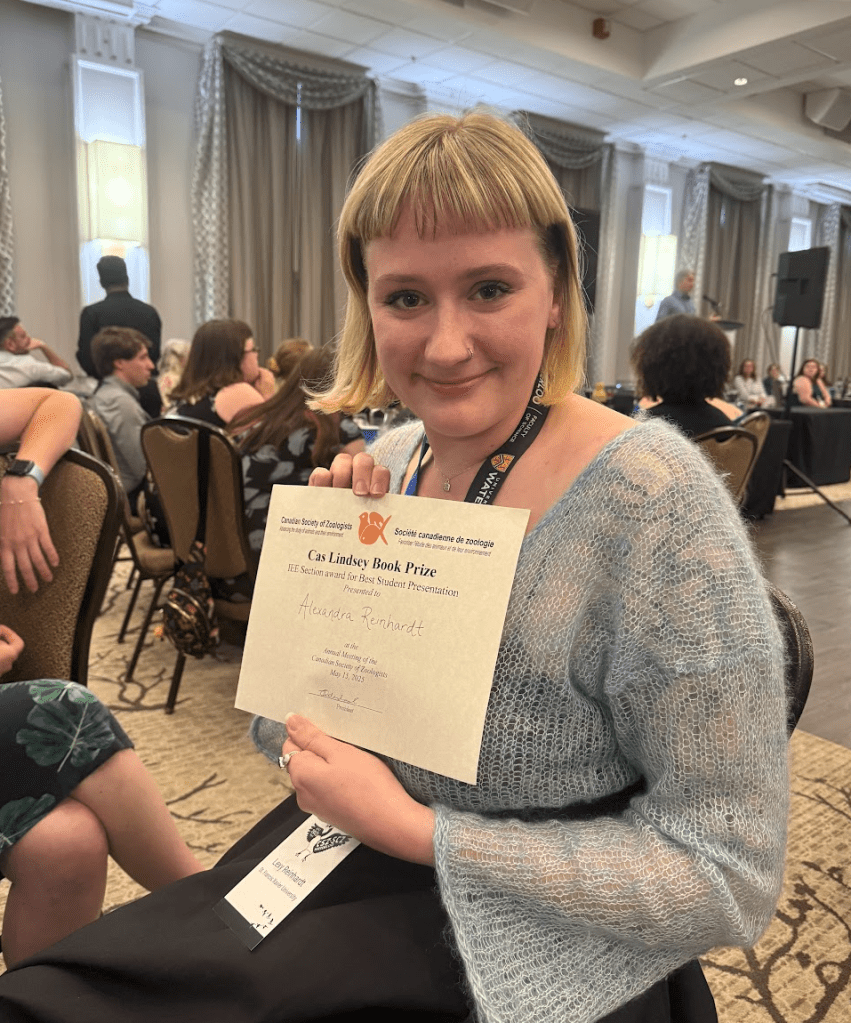
And Lexy presented the first analyses of her MSc project. She is studying nudibranch navigation using data collected on Hermissenda last summer at Bamfield Marine Sciences Centre: A first look at gastropod navigation in complex wave affected environments. She did even better, winning the CAS Lindsay Prize for best student presentation or poster in the fields of behaviour, ecology or evolution!!!
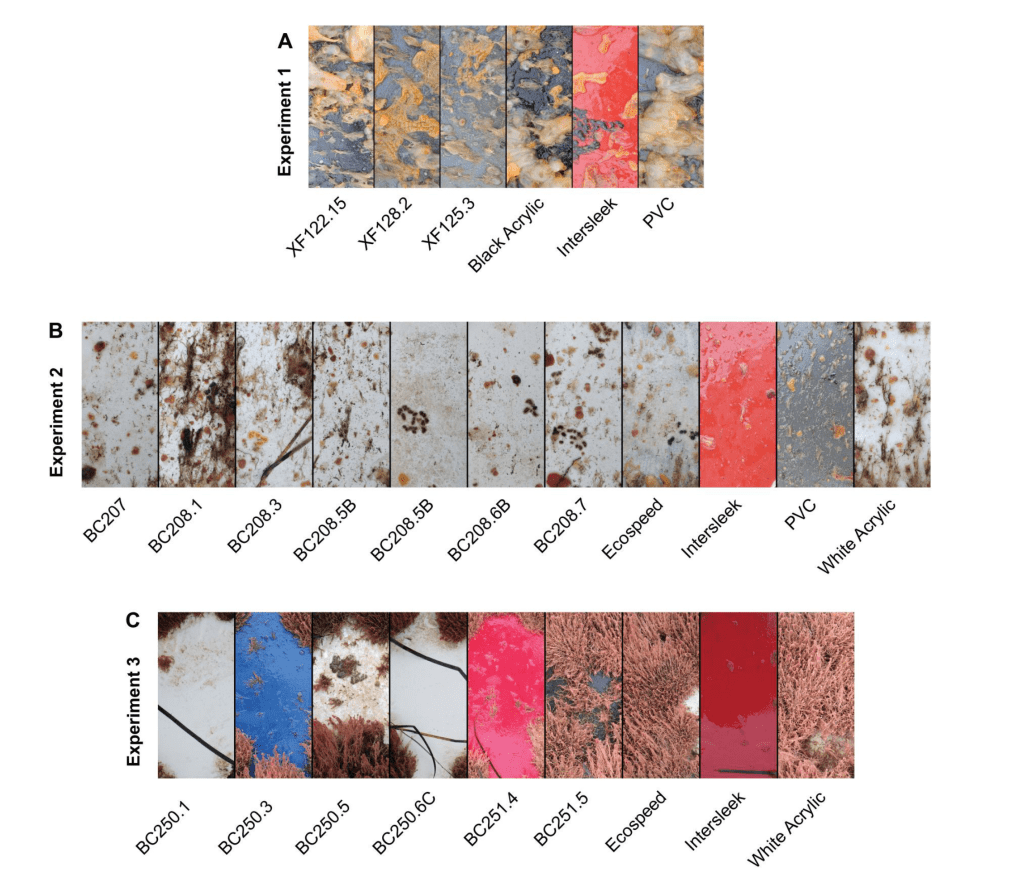
Special congrats to Ally Hunter who led the effort to get this study published. The experiments were spread over three years, conducted by the biofouling group, including contributions from Ally, Aaron, Kristyn, Kylie, Katherine, and Lexie. We field tested prototype coatings developed by our collaborator, GIT Coatings, Inc., and showed that by the final year, the coatings were able to reduce development of biofouling. The antifouling effect is probably based on making the coating surface slippery, making them much easier to clean off than uncoated surfaces. Such “fouling-release” coatings are a standard modern approach to producing an antifouling coating with lower environmental impacts. What makes the GIT coatings special is that they have higher hardness than typical, making them likely to be more durable than the relatively soft current fouling-release coatings on the market. In fact, our study is (we believe) the first study to document development of a hard fouling-release coating.
Representative examples of hard-fouling release prototype coatings (XF and BC codes) compared against a commercial fouling-release coating (Intersleek) and other control surfaces.
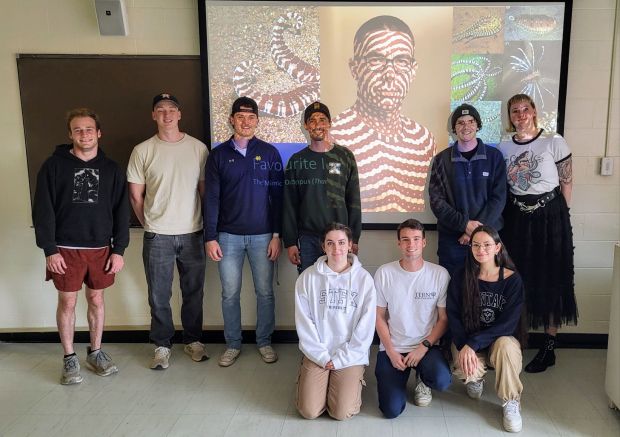
Our first lab meeting of the summer research season was an opportunity for a full lab photo… Standing left to right: Ryan, Liam, Payton, Mike, James, Lexy Kneeling left to right: Tia, Aidan, and Lauren Background: courtesy of Aidan, and AI generated version of RCW with mimic octopus colouration!
Congratulations to Aidan McGowan who graduated with his BSc in Biology this past weekend! Although courses are done, he’ll be sticking around to work on the juvenile lobster research project for the next 8 months (at least!)
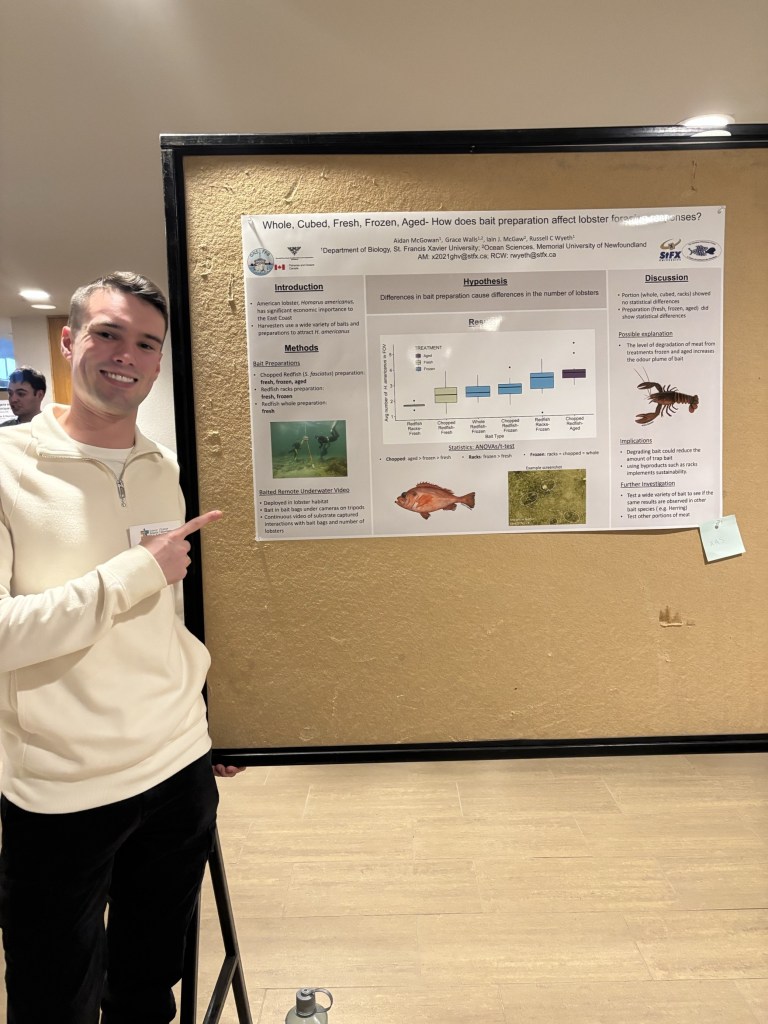
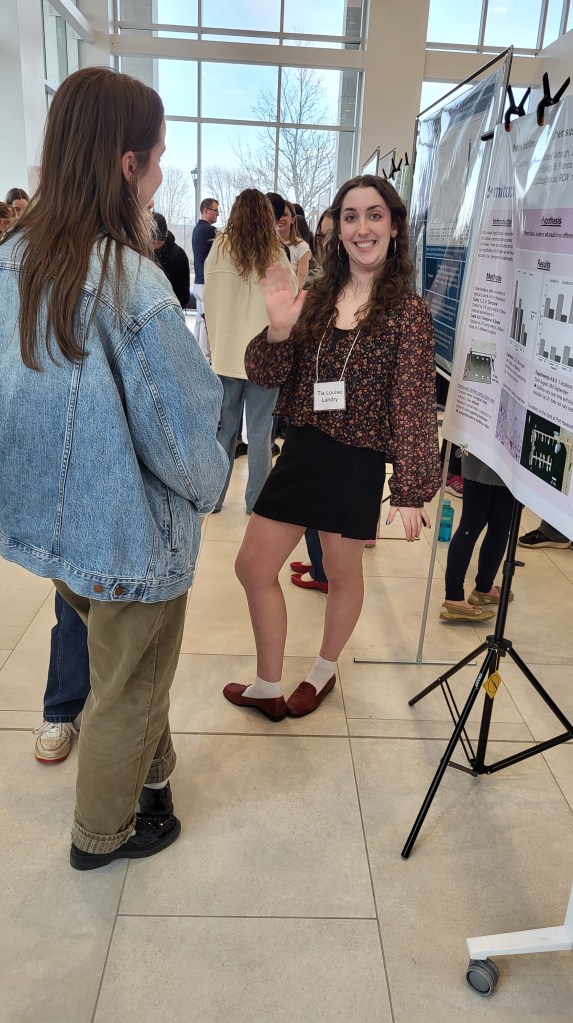
Kudos to the awesome undergraduate students who have been sharing our work recently! At Science Atlantic, Aidan McGowan presented some of the collective work of the lobster group on how lobsters respond to different portions and preparations of bait (lobsters aren’t picky). At Student Research Day, Tia Landry presented on the biofouling group‘s initial explorations of how the susceptibility of biofilms to ultraviolet light varies with time and location (it doesn’t). Also at Student Research Day, Lauren Pictou presented on some her work from last summer on the snail neuroanatomy. So far, she’s found very little matching between FOUR different methods for labelling Choline Acetyltranferase (the enzyme that makes the neurotransmitter acetylcholine). All three poster posters are below!
The Wyeth Lab neuroanatomy team is currently focused on identifying and describing different neuron types in the nervous system of the great pond snail, Lymnaea stagnalis. This freshwater pulmonate is commonly used as a model organism in neurobiology due to its relatively large (including giant neurons!) and fewer neurons making it ideal for detailed studies.
Neuroanatomy is a crucial starting point in neuroethology, as mapping out the structural framework of neurons and their connections is essential before understanding how the nervous system controls behavior. By using genes and functional proteins associated with neurotransmitter synthesis, we can classify different neuron types. Our research aims to advance neuronal classification by investigating the anatomical morphology and distribution patterns of neurons containing various neural-specific genes and proteins in L. stagnalis.
We use two methods: immunohistochemistry and in situ hybridization chain reaction (HCR). Immunohistochemistry is a protein-based technique that uses antibodies to label antigens, while HCR is an mRNA-based technique that labels gene target sequences. Recently, we have been combining both techniques in a single protocol, allowing us to closely visualize neurons that contain both mRNA and the functional proteins involved in neurotransmitter synthesis.
Our current investigations focus on several key enzymes involved in neurotransmitter synthesis:
Tyrosine Hydroxylase (involved in dopamine synthesis)
Dopamine Beta-Hydroxylase (involved in norepinephrine synthesis)
Tyramine Beta-Hydroxylase (involved in octopamine synthesis)
Choline Acetyltransferase (involved in acetylcholine synthesis)
By exploring these enzymes with different molecular techniques, we aim to uncover new insights into the complex organization and function of the nervous system in L. stagnalis. Overall, this will help bring us a step closer towards the goal of understanding how the nervous system works to control behaviour!
A dorsal view of the central nervous system of L. stagnalis, showing a double label of Tyrosine Hydroxylase (TH) enzyme labelled with immunohistochemistry (IHC), followed by TH mRNA expression labelled with in situ hybridization chain reaction (HCR). The white areas show strong co-expression of both targets. Note the strong labelling of neural fibers (axons and dendrites) with immunohistochemistry.A dorsal view of the central nervous system of L. stagnalis, showing a double label of octopamine (OA) neurotransmitter labelled with immunohistochemistry (IHC), followed by Tyrosine-Beta-Hydroxylase (TBH) mRNA expression labelled with in situ hybridization chain reaction (HCR). The white areas show strong co-expression of both targets.