News

M.Sc. Position to Study Juvenile Lobster Behaviour

NOTE: THIS POSITION HAS BEEN FILLED [updated March 2024]

Interested in aquatic animal behaviour, with practical implications for sustainable fisheries and marine conservation?

Interested in building expertise in a range of techniques, including field work (snorkeling or SCUBA), Remotely Operated Vehicle use, and machine-learning-assisted video analysis of behavioural observations?
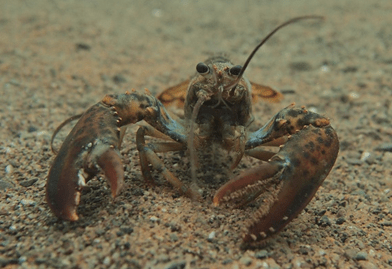
Our research is focused on building a more detailed understanding of juvenile lobster behaviour. We have developed tripod-mounted underwater camera systems that are effective at recording lobster behaviours in their natural habitat. The cameras provide unprecedented detail over durations far longer (up to 9 h of recording time) than has been achieved in past studies via SCUBA or other methods.  To date, we have focused on foraging behaviours of adult lobsters.  Our goal now is to shift our focus to juvenile lobsters behaviour and behavioural ecology.  Additional observations are planned using a Remotely Operated Vehicle (ROV).

Our primary goal is to establish a baseline data set of juvenile lobster behaviour.  The Department of Fisheries and Oceans has recently created a series of marine protected areas in the Southern Gulf of St. Lawrence. The Scallop Buffer Zones exclude scallop dragging, and are designed to protect juvenile lobster habitat. Our behavioural work will establish a baseline for on-going monitoring of juvenile lobsters into the future.  The behavioural data will be combined with additional population density surveys to assess the effectiveness of the marine protected areas, to help manage the lobster fishery, and to monitor the possible effects of climate change on the lobster population. 

Position start date: Jan 2024 or May 2024

For further information or to apply, contact Dr. Russell Wyeth: rwyeth@stfx.ca

Post-doc position available

Post-Doctoral Fellowship in Sustainable Anti-biofouling Technologies

  • Are you passionate about developing sustainable solutions to environmental challenges in trillion-dollar ocean industries?
  • Are you interested in developing interdisciplinary skills in collaboration with experts from industry and academia?

Memorial University of Newfoundland-Grenfell Campus and St. Francis Xavier University, through funding from the Ocean Frontier Institute (OFI), Mitacs and industrial collaborator Graphite Innovation and Technologies (GIT), are recruiting a Post-Doctoral Fellow to develop cutting edge anti-biofouling technologies for ocean industries in Atlantic Canada.

For more information and how to apply, please click here.

In the news

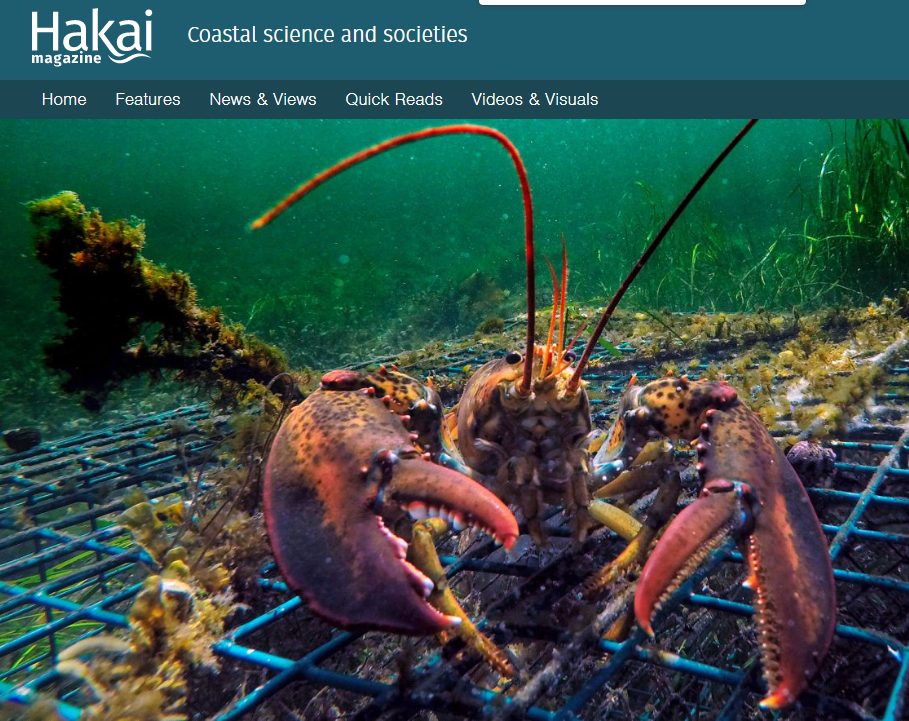
We’re in the news! Hakai magazine has a big article about the complexities of the bait issue in lobster harvesting. Our research on lobster foraging responses is highlighted as part of the varied efforts being put towards alternative bait adoption in the fishery. Hopefully this can help build some momentum towards switching to more sustainable bait options in the long run. Big kudos to the small army of students who have worked on the project over the years: Grace, Rachel, Michelle, Gavin, Laura, James, Aidan, Megan, Max, and Lia, and thanks to Moira Donovan for the article.

Publication!

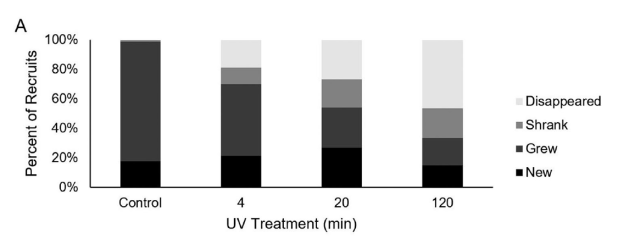
Congrats to Katherine P who led this manuscript as well as Kylie, Lexie, Ally, and Emmerson who all shared in the work. Using an image time series of macroscopic marine inverts, we show that even a single dose of ultraviolet light can reduce or delay marine biofouling. In addition, by adding an analysis of the new settlers immediately before and after the ultraviolet treatment, we show that the mechanism of action is probably direct toxicity of the ultraviolet light for those new settlers.

Full Text Link

Purvis, K., Curnew, K.H., Trevors, A.L., Hunter, A.T., Wilson, E.R., and Wyeth, R.C. 2022. Single Ultraviolet-C light treatment of early stage marine biofouling delays subsequent community development. Biofouling: 1–11. doi:10.1080/08927014.2022.2095906.

Alternative Lobster Bait Technology Researcher Position Available

NOTE: this position has been filled

NOTE: remote work is a possibility for this position

The Wyeth Lab at St. Francis Xavier University is seeking to add to our research team. Our fundamental and applied research program explores more sustainable options for bait use in the lobster fishery. The new researcher will help coordinate and complete analysis of lobster responses to different lobster bait technologies. The researcher will work under the supervision of Dr. Russell Wyeth, helping with many aspects of data management and analysis. The researcher’s primary role will be to support the successful analysis of existing data sets, working with both the supervisor and students to analyzed abundances of lobsters, behavioural video and audio, and environmental data relevant to assessing lobster responses to different bait technologies. In addition, the researcher will help to prepare oral and written communications about the data and our conclusions. Administrative tasks in support of the supervisor will also be involved, as well as opportunities to engage with other active research projects.  

Note: the position is subject to final budgetary approval once a candidate is selected

Duties and responsibilities

• help the project lead with overall organization of research activities
• help with specific project planning and administration
• co-supervision of student researchers
• data analysis
• materials and equipment management
• help with report and manuscript writing  

Knowledge and skills

Essential knowledge and skills
• ability to work independently
• meticulous organization
• time management
• effective oral and written communication
Desirable knowledge and skills:
• ecosystem-based fisheries management
• lobster harvesting
• research experience
• reading and summarizing scientific literature
• digital photography
• image processing
• digital video production
• software: MS Excel, SPSS, R
• statistical analysis
• scientific presentation
• scientific writing
• marine field work experience  

Eligibility Requirements (based on this program)

  • Post-secondary graduates
  • No more than 30 years of age at the start of the position
  • Canadian citizens, permanent residents or persons granted refugee status in Canada*
  • Legally allowed to work according to the relevant provincial and Canadian legislation and regulations
  • Available to work for at least six months (26 weeks)

Employment Period

07/16/2022  – 02/28/2023, with the possibility of an extension

Salary

$1200 + 4% in lieu of vacation, biweekly

Application Procedure

Send a resume/CV, unofficial transcript, and a statement of interest to rwyeth@stfx.ca


Dynamic Biofouling Research Technician Position Available

NOTE: this position has been filled

The Wyeth Lab and Centre for Biofouling Research (CBR) at St. Francis Xavier University is seeking a research technician. Our fundamental and applied research program explores both marine biofouling (the growth of unwanted organisms on marine infrastructure) and novel low-toxicity approaches to antifouling (the mitigation of biofouling). The technician will help develop and coordinate a new dynamic testing system that incorporates water flow into our field work. Real-world conditions for marine infrastructure typically includes water movement over surfaces colonized for biofouling: ship hulls during vessel travel, aquaculture pens during tidal flow, etc. The technician will contribute to designing, prototyping and operating a dynamic test system that generates flow over novel antifouling technologies. The technician will work under the supervision of Dr. Russell Wyeth. Activities working towards completion of the project will entail working with both the supervisor and students to plan and implement field work, undertake sampling, and, once completed, prepare oral and written communications about the project. Interaction with industry members and other stakeholders will also be expected. Administrative tasks in support of the supervisor will also be involved, as well as opportunities to engage with other active research projects.

Note: position is subject to final budgetary approval once a candidate is selected  

Duties and responsibilities

• materials management
• equipment set-up and operation
• data collection and analysis
• coordination of dynamic testing research projects
• help the project lead with overall organization of research activities
• co-supervision of student researchers
• help with report and manuscript writing
 

Knowledge and skills

Essential knowledge and skills
• ability work independently
• meticulous organization
• time management
• effective oral and written communication
Desirable knowledge and skills:
• principles of marine biofouling
• antifouling technologies
• basic hydrodynamics
• research experience
• custom equipment construction (e.g. maker-space experience)
• reading and summarizing scientific literature
• digital photography
• image processing
• software: MS Excel, SPSS, R
• statistical analysis
• scientific presentation
• scientific writing
• small boat experience
• marine field work experience
 

Eligibility Requirements (based on this program)

  • Post-secondary graduates
  • No more than 30 years of age at the start of the position
  • Canadian citizens, permanent residents or persons granted refugee status in Canada*
  • Legally allowed to work according to the relevant provincial and Canadian legislation and regulations
  • Available to work for at least six months (26 weeks)

Employment Period

07/16/2022  – 02/28/2023, with the possibility of an extension

Salary

$1200 + 4% in lieu of vacation, biweekly

 Application Procedure

Send a resume/CV, unofficial transcript, and a statement of interest to rwyeth@stfx.ca

a busy Wyeth lab

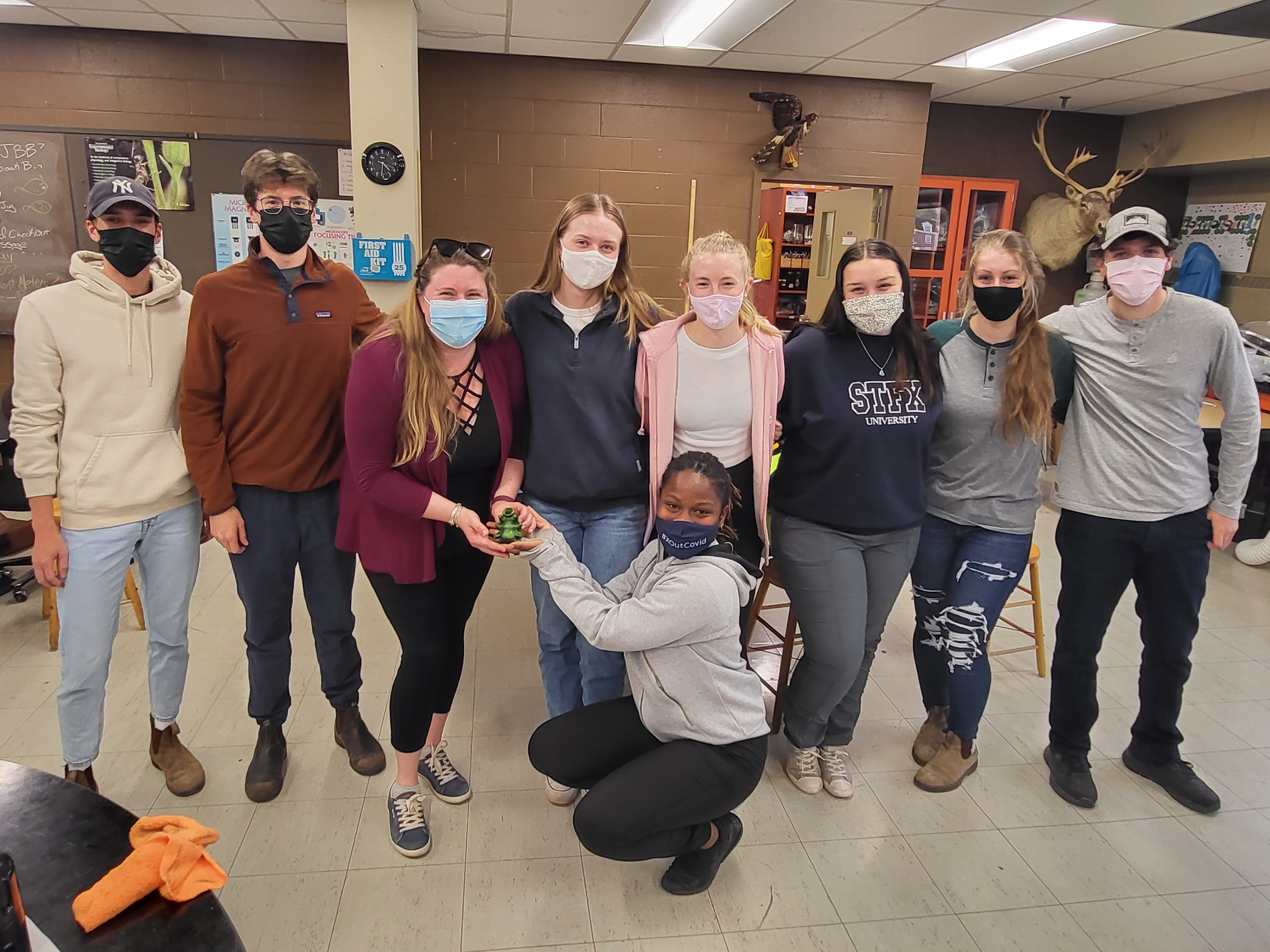
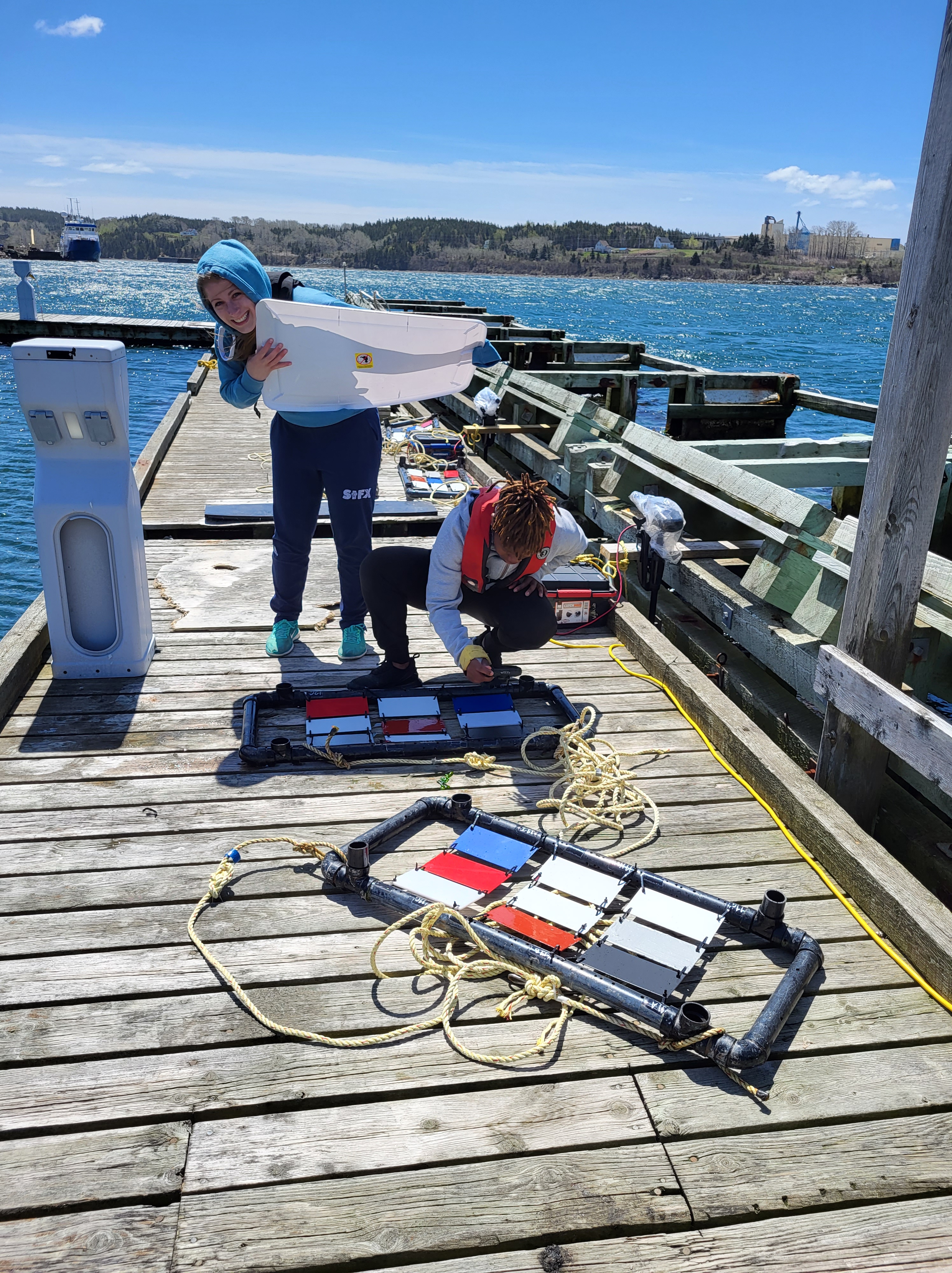
Lots going on this summer in the lab and field! The lobster foraging group (Grace, Aidan, Gavin , James, and Laura) are continuing to use underwater video and audio to record how different types of lobster bait and natural prey affect foraging responses and other behaviours in American lobsters. The biofouling group (Ally, Kristyn and Kylie) are busy testing the effectiveness and validating the low toxicity of graphene-based antifouling coatings (formulated by our industry collaborators, GIT) as well as continuing to explore the relative effectiveness hourly vs daily cycles of UV-light as an antifoulant. The gastropod neuroethology group (Makayla, Kali, and Noah) are tackling three different projects with pond snails: how they move in response to fine scale odour and flow stimuli, testing electrophysiological responses to food odours in the lips, and some more work on the neuroanatomy of the cephalic sensory organs (to take advantage of our department’s brand new confocal microscope).

Integrative Aquatic Chemosensory Biology Graduate Student Position Available

Interested in aquatic animal behaviour or integrative fields such as neuroecology or neuroethology?

Interested in building expertise at more than one level of inquiry in biology, from field studies, through behavioural experiments, neurophysiology and microscopy, to gene expression and bioinformatics?

Dr. Russell Wyeth in the Biology Department at St. Francis Xavier University (StFX) is accepting applications for an MSc student position to start January 1, 2023 (or earlier).

(more…)

Biofouling Graduate Student Position Available

NOTE: THIS POSITION HAS BEEN FILLED

Are you interested in developing technology that supports coastal communities? Are you interested in sustainable solutions to global economic challenges? Would you like to collaborate with a diverse group of specialists toward a common goal?

The Canadian federal government has invested in the development of sustainable anti-biofouling technology through the provision of an NSERC Alliance Missions grant for a partnership of Atlantic Canadian academic researchers and industry. Researchers at Cape Breton University have partnered with teams at Dalhousie University, St. Francis Xavier University, and Memorial University of Newfoundland Grenfell Campus to form a multi-institutional research network to coordinate graduate training, research outcomes and deliverables, intellectual property development, and market translation of novel sustainable marine coatings. We are collectively recruiting three graduate students who will work synergistically towards our overall goals. More information on the overall partnership is here.

The fully funded graduate position in the Wyeth Lab is focused on experimental approaches for evaluating anti-biofouling activity during high-throughput and field testing of coatings and/or UV-C irradiation. The candidate will be registered in a Master of Science program at St. Francis Xavier University and will interact with the Center for Biofouling Research, but also participate in the multi- institutional team including some travel to do experimental work at Cape Breton University. The target start date for this project is January 1, 2023.

Read more: Biofouling Graduate Student Position Available

For questions regarding the Wyeth Lab graduate project research please contact Dr. Russell Wyeth at rwyeth@stfx.ca

Submitting an Application

NEW Deadline for Submissions: June 17, 2022

Please submit a cover letter and a résumé or curriculum vitae detailing your experience and any peer-reviewed publications, an unofficial transcript, a writing sample (for example, your undergraduate thesis or other relevant work), and a statement of interest indicating the project(s) that you are interested in to Andrew_Carrier@cbu.ca (note the underscore) using the subject “Graduate Opportunities”. For works with multiple authors please indicate your specific contributions.  

We invite applications from all eligible applicants, with preference given to Canadian citizens or permanent residents. Applicants from under-represented groups, including women, visible minorities, transgender individuals, those with disabilities, etc., may choose to identify themselves in their correspondence.